
"coffee growing in Central America"
2000 article(s) found

Located in the middle of North and South America, the Guatemalan Coffee Waijangs Plateau
Guatemala is located in the center of North and South America, and its geographical location occupies an important position in Central America. Guatemala covers an area of about 108899 square kilometers. The land features can be divided into plateau volcanoes, lowland tropical forests, volcanic sandy shore plains along the Pacific coast, and virgin lands along the Caribbean Sea. The SierraMadre Mountains of Central America span east and west of Guatemala, covering an area of

Introduction to the quality of Kenyan coffee varieties different from bourbon beans in Central and South America
Different from bourbon beans in Central and South America. This Kenyan native species was created by Scott Laboratories in 1930, known as SL for short. Agronomists wanted to find a kind of bourbon with high yield and resistance to diseases and insect pests, and obtained SL28 through experiments. SL28 is a genetic variant with a mixed pedigree of French missionaries, mochas and Yemens Tibica, which was originally cultivated for SL28.

Nicaraguan Coffee Industry introduces Fine Coffee Matagalpa Central Central America
Now that Nicaragua is facing a crisis in the coffee industry, most coffee farmers reflect on the shortcomings of the original mode of production. "sometimes the crisis can divide the hearts of the people, but sometimes it can also unite the hearts of the people," he said. Many Nicaraguan coffee farmers find that they can survive if they join cooperatives, organic certification schemes, or fair trade associations. "Bacon and

Coffee trees grow around the equator.
Coffee trees grow in tropical or subtropical agricultural gardens centered around the equator and called coffee belts. Most of the coffee production is between the Tropic of Cancer, 25 degrees north of the tropical or subtropical equator and 30 degrees south of the equator. An area with an annual average temperature of 16-25 degrees Celsius, no Frosts Descent and rainfall of 1600-2000 mm. At present, coffee is mainly produced by seven countries.

Three Coffee producing areas in America | brief introduction of Tara Pearl producing area with Costa Rican bean flavor
Professional coffee knowledge exchange more coffee bean information please follow the coffee workshop (Wechat official account cafe_style) front street-American coffee producing area brief introduction of Costa Rica Tarazu producing area of Costa Rica is located in Central America, Latin America, bordering Nicaragua in the north, Panama to the south, the Caribbean Sea to the east, and the Pacific Ocean to the west, Costa Rica is located in Central America and Latin America, bordering Nicaragua in the north, Panama in the south, the Caribbean in the east and the Pacific Ocean in the west.

Boutique Coffee Manor: global Coffee producing area America introduces various kinds of coffee beans in detail No.1
There are more than 60 coffee producing countries and regions in the world, most of which are located in the tropics and subtropics covered by the Tropic of Cancer, and the equator passes through this area. this coffee cultivation area is also known as coffee belt or coffee area. Today I would like to introduce to you the situation of its coffee producing areas in Central America. First, Costa Rican coffee has full particles, ideal acidity and unique strong flavor. The Tower of Costa Rica

A brief introduction to the planting manor, growing environment and treatment of Nicaraguan coffee
Traditional Nicaraguan coffee farmers are used to using water washing method for subsequent processing of coffee fruits. Coffee farmers are more accustomed to using water washing to ensure that the flavor of raw coffee beans is more stable and clean. it was not until about 2009 that the traditional attitudes of coffee farmers changed and began to try processing methods such as full sun and honey in more areas. Nicaragua is located in central Central America.

Coffee leaf rust has a great effect on the quality of coffee how to prevent the occurrence of leaf rust correctly
The shift from traditional shading to sun-exposed cultivation may be the main cause of large-scale outbreaks of coffee leaf rust on coffee farms in Central America and Mexico. Coffee leaf rust was discovered in Central America as early as 40 years ago, but the recent outbreaks in Central America (Colombia, Costa Rica, El Salvador, Guatemala, Nicaragua) and Mexico are by far the most serious and dangerous.
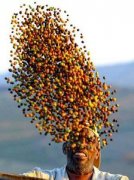
Coffee trees grow around the equator.
Coffee trees grow in tropical or subtropical agricultural gardens centered around the equator and called coffee belts. Most of the coffee production is between the Tropic of Cancer, 25 degrees north of the tropical or subtropical equator and 30 degrees south of the equator. An area with an annual average temperature of 16-25 degrees Celsius, no Frosts Descent and rainfall of 1600-2000 mm. At present, coffee is mainly produced by seven countries.

Coffee mellow Tour (22) Coffee's second hometown-South America
Finally, finally going to South America. From the hometown of coffee in Africa, to the crown of coffee in the Caribbean, to the third world of coffee in Central America, now it has finally arrived in South America, the second hometown of coffee. The second hometown is worthy of the name. There are Brazil, the largest coffee producer in the world, and Colombia, the third largest coffee producer (Colombia is also the best Arabica coffee and washable coffee beans in the world.

A brief introduction to the History and Culture of the Origin and Development of Honduran Fine Coffee beans in Central America
Honduras produces two kinds of coffee of very good quality, which are highly respected by coffee lovers. One is the highland coffee growing at 1000-1500 meters above sea level, and the other is the selected highland coffee growing at 1500-2000 meters above sea level, which represents the highest level in Honduras. Most of the Honduran coffee is exported to the United States and Germany. The granules of coffee beans in Honduras are more shaped than those in Honduras.
Planting of boutique coffee trees Coffee leaf rust
Coffee leaf rust was discovered in Central America as early as 40 years ago, but recent outbreaks in Central America (Colombia, Costa Rica, El Salvador, Guatemala, Nicaragua) and Mexico are by far the most serious. Guatemala, Honduras, Costa Rica and other countries have declared a national state of emergency. President of Guatemala says leaf rust will cause Guatemala

Introduction to the method of describing the characteristic Flavor of Coffee beans in Latin America
Characteristics of flavor description of coffee beans in Latin America Central and South America is the largest coffee producing area in the world, and there are numerous boutique coffees here. Take Colombia, Guatemala or Brazil as an example, good coffee is enough to make people dazzling. What is the resource advantage that makes Central and South America so good? French naval officer Gabriel Mat in 1721
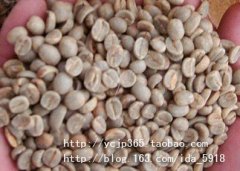
Starting with Coffee beans (2)-- America-Costa Rica
Tarrazu of Costa Rica is one of the major coffee producing areas in the world with full grains, ideal acidity and unique strong fragrance. The coffee produced is light and pure in flavor and pleasant in aroma. Costa Rica, with its fertile volcanic soil and good drainage, was the first country in Central America to grow coffee and bananas for commercial value. Coffee and bananas are the country's main exports

Characteristics of Central American producing areas | famous boutique coffee producing area of Tarazu Coffee, Costa Rica
Professional coffee knowledge exchange more coffee bean information please follow the coffee workshop (Wechat official account cafe_style) front street-Costa Rica Tarazu introduction Costa Rica is located in the low latitudes of Central America, the central plateau and mountains about 800 to 2000 meters above sea level. The climate here has two obvious dry and wet seasons. The harvest period is from November to March of the following year, which coincides with the dry season.

Introduction to Panamanian Coffee, the King of Coffee Price ratio in Central America
The unique and most important resource of Panamanian coffee is its microclimate. The east-west environment of the Republic of Panama converges cold air over 6500 feet through the Central Mountains, creating a variety of microclimates in the Boquete and Volcn Candela regions, making it a major producer of Panamanian coffee. These specialty coffees are located in the Baru volcano area.

Treatment of Papamara Honey from Blueberry Manor in Guatemala Coffee New Oriental region in Central America
Professional coffee knowledge exchange more coffee bean information please follow the coffee workshop (Wechat official account cafe_style) Little Blueberry Manor Pacamara Honey treatment Little Blueberry Manor is one of the highly cultivated and powerful manors in Guatemala, the manor owner professionally manages the farm, the challenge of growing coffee at 2300 meters also challenges the limit of the higher the flavor is planted in Arabica and in

Panamanian Coffee Flavor Manor, the King of Coffee Price ratio in Central America, introduces Esmera.
Panama Coffee, the king of coffee price in Central America, has been among the best coffee producers in the world since three years ago, surprising countries that have been in the vanguard of developer production for many years. Panamanian coffee is mainly produced in the west near the Costa Rican border, producing the best washed coffee. Compared with coffee beans grown at low and middle elevations

Characteristics of Coffee beans in Latin America Flavor description of planting area texture treatment Grinding scale
Characteristics of Latin American coffee beans Flavor description of the growing area the method of grinding and calibrating the advantaged tropical rain forest environment in some parts of Bolivia provides excellent natural conditions for the growth of organic coffee. The aroma of Bolivian coffee is rich and unique, whether it is the aroma of ground beans or the aroma of coffee, similar to the mixture of flower and fruit aroma.

How is the flavor of Costa Rican Tarazhu? how much is a pack of Costa Rican Tarazhu coffee beans
Professional coffee knowledge exchange more coffee bean information please follow the coffee workshop (Wechat official account cafe_style) Tarazhu from Costa Rica, beans in Central and South America always have a unique nutty flavor, this taste similar to almonds or cocoa seems to have become a certain degree of recognition in the whole large producing areas of Central and South America, different countries show different under this basic flavor